Wildlife9 min read
The Ultimate Guide to the Great Migration
Discover how the Great Migration moves between Kenya's Maasai Mara and Tanzania's Serengeti, when to visit, where to find the herds and how to plan your safari.
Admin
31 October 2026

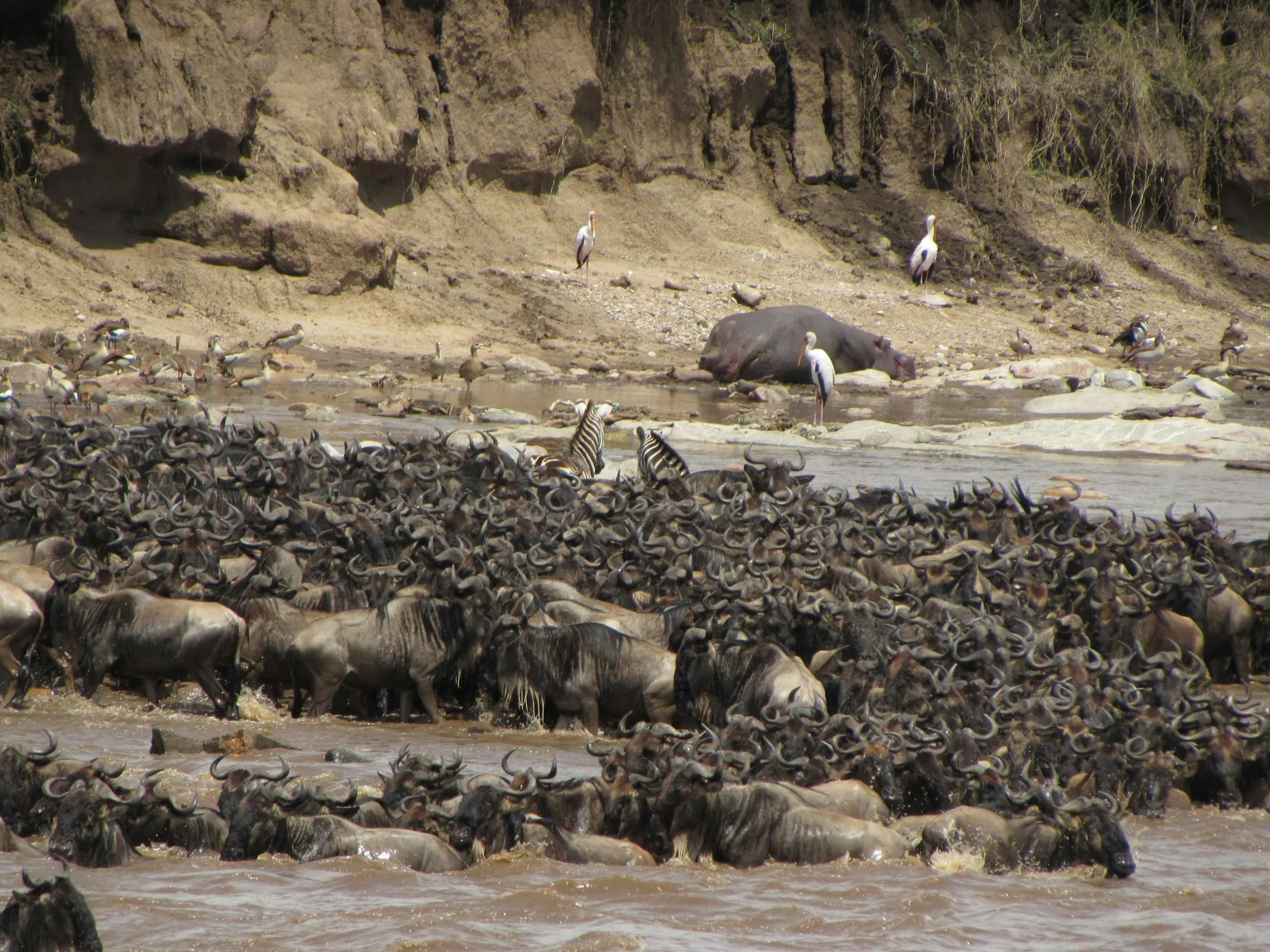
The Great Migration is often associated with dramatic wildebeest river crossings in Kenya's Maasai Mara. However, these famous scenes represent only one part of a much larger natural cycle involving millions of grazing animals across Tanzania and Kenya. The scale is remarkable and estimates for the wider Serengeti ecosystem include approximately 1.5 million wildebeest, 900,000 Thomson's gazelles and 300,000 zebras. The migratory wildebeest population itself is estimated at around 1.3 million. Together, these animals form one of the largest remaining land migrations on Earth. Their movement covers an annual circuit of roughly 1,000 kilometres through the Serengeti–Mara ecosystem. Driven by seasonal rainfall and the search for fresh grazing and water, the herds move through different regions at different times of the year. Their journey also attracts predators, including lions, cheetahs, leopards and hyenas.
For travellers planning a Great Migration safari, understanding this movement is essential. Visiting the Maasai Mara in August offers a different experience from exploring Tanzania's southern Serengeti during the calving season. The best destination therefore depends on what you want to witness and when you intend to travel. This guide explores the numbers behind the migration, its seasonal route, the best viewing periods and how to plan a safari with Samton Safaris around this remarkable wildlife event.
What Is the Great Migration and Why Does It Happen?
The Great Migration is the annual movement of wildebeest and other grazing animals across the Serengeti–Mara ecosystem, which extends through northern Tanzania and southwestern Kenya. It is not a single event or a journey along a fixed route. Instead, it is a continuous cycle influenced by rainfall, fresh grass and the availability of water. Wildebeest make up the largest part of the migrating herds, while zebras and gazelles also travel through the ecosystem. These animals move in response to changing grazing conditions, following areas where fresh vegetation becomes available. As the herds travel, predators such as lions, cheetahs, leopards and hyenas take advantage of the opportunities created by the movement of large numbers of prey animals. One of the most important stages takes place in the southern Serengeti, where thousands of wildebeest calves are born during the calving season, usually around January to March, with births particularly concentrated in February. The abundance of young animals also attracts predators, making this a significant period for wildlife viewing and best time to book the great migration safari package with us. The journey later takes the herds through central and western parts of the Serengeti before they move towards the northern Serengeti and the Maasai Mara. Their return south completes the broader annual cycle. Rainfall patterns influence the timing, meaning the route and location of the herds can change from one year to another.
Where Does the Great Migration Take Place Throughout the Year?
The migration covers a vast area, and the herds spend different parts of the year in different sections of the Serengeti–Mara ecosystem. Knowing these seasonal patterns helps travellers select a destination that matches their preferred experience.
January to March – Southern Serengeti: The herds are generally found across the southern plains, including the Ndutu area. This is the main calving period, when large numbers of wildebeest give birth. The concentration of young animals can also attract predators.
April to May – Central and Western Serengeti: As grazing conditions change, herds begin moving north and west. This period can bring large columns of wildebeest travelling across the plains, although rainfall may affect road conditions.
June to July – Western and Northern Serengeti: The migration continues towards the northern regions. The Grumeti River area may offer opportunities to witness river crossings, while herds gradually move towards the Mara River system.
July to October – Northern Serengeti and Maasai Mara: Large herds may be found around the northern Serengeti and Kenya's Maasai Mara. This is the period most commonly associated with Mara River crossings, which can be dramatic but are unpredictable.
October to December – Return towards the southern plains: Following changing rainfall and grazing conditions, herds generally begin moving south through the Serengeti. Their exact movements depend on when and where fresh grass becomes available.
These periods are general seasonal patterns, not fixed travel dates. The herds may arrive earlier or later, spread across different areas or remain in one location longer than expected. A safari planned around the migration should therefore consider both the month of travel and the particular region being visited.
When Is the Best Time to See the Great Migration?
There is no single month that guarantees the best Great Migration experience. The timing of your safari can determine whether you witness thousands of wildebeest crossing a river, newborn calves taking their first steps or enormous herds spreading across the open plains. Each stage offers something different, and choosing the right one can make all the difference to your holiday.
The best time to see the Great Migration, depends on which stage of the migration interests you most. Travellers hoping to witness the famous river crossings will generally consider July to October, while those interested in newborn wildebeest and predator activity may prefer the beginning of the year in Tanzania. For the Maasai Mara, July to October is the main period associated with the migration. Large herds may enter Kenya from the northern Serengeti, bringing opportunities to observe wildebeest and zebras moving across the reserve. August and September are popular months for travellers hoping to see Mara River crossings, although no particular crossing can be guaranteed. If calving is your priority, January to March is generally more suitable for the southern Serengeti. The open plains provide grazing areas for the herds, and the birth of thousands of wildebeest creates opportunities to observe interactions between young animals and predators.
June and July can also be rewarding for visitors exploring Tanzania's western and northern Serengeti. Depending on the herds' movements, the Grumeti River area may offer crossing opportunities before the animals continue north. The important distinction is that the Great Migration is not limited to the Maasai Mara's peak season. Tanzania hosts much of the annual movement, and different parts of the ecosystem offer worthwhile experiences throughout the year. Your travel dates should be matched to the stage you want to explore rather than based solely on the most publicised river-crossing photographs.
How Do You Plan a Great Migration Safari?
Planning a migration safari requires more than choosing a popular month. We can help you to plan for the location of your accommodation, the number of days available and the flexibility of your itinerary which can greatly all influence your experience. If you are travelling specifically to see the herds in the Maasai Mara, consider staying within or near the areas where the migration is expected during your travel period. For a Tanzania-focused safari, the southern, western or northern Serengeti may be more appropriate depending on the season. Our knowledgeable local guides can also help interpret current wildlife movements and identify suitable areas to explore. Additionally, allow enough time for game drives rather than expecting the migration to appear immediately. Herds may be spread across extensive grasslands, and even when they gather near a river, they may wait before attempting to cross. The movement can happen quickly, but it can also involve long periods of waiting.
Our safari packages for the Great migration encourages the practice of responsible wildlife viewing which is equally important to the ecosystem and animals. River crossing areas can attract many safari vehicles, so visitors should follow park regulations and their guide's instructions and for vehicles should use designated viewing areas and avoid crowding, blocking or disturbing animals. Tanzania National Parks such as the Serengeti National Park has also published specific guidelines for viewing Mara River crossings to help protect the wildlife and visitor experience. For a more complete experience, consider whether you would prefer to explore both Kenya and Tanzania, which is recommended for a 8-day safari package. Combining the Maasai Mara with the Serengeti can provide a broader understanding of the ecosystem, although the itinerary should be planned around travel logistics, available time and seasonal conditions.
Frequently Asked Questions About the Great Migration
1. How many animals take part in the Great Migration?
The migration involves more than a million wildebeest, alongside large numbers of zebras and gazelles. The exact population figures vary, but wildebeest make up the largest proportion of the migrating herds.
2. Is the Great Migration better in Kenya or Tanzania?
Both destinations offer different stages of the same migration cycle. Tanzania's Serengeti provides opportunities to see the calving season and the herds' movement through different regions, while Kenya's Maasai Mara is particularly associated with the northern migration and Mara River crossings. Your choice depends on the experience and travel period you prefer.
3. Are Mara River crossings guaranteed during migration season?
No. River crossings are natural events that depend on animal movements and environmental conditions. Herds may gather along the riverbanks for extended periods before crossing, and some may use different crossing points. Even during peak migration months, a crossing cannot be guaranteed.
4. How many days should I spend on a Great Migration safari?
The ideal duration depends on the destination and stage of migration you want to follow. Allowing several days in the relevant region gives you more opportunities to explore different areas and respond to changing herd locations. A longer itinerary may be worthwhile if the migration is the main purpose of your holiday.
5. Can I see the Great Migration outside July and October?
Yes. The migration takes place throughout the year. January to March is associated with calving in the southern Serengeti, while April to June generally sees herds moving through central and western areas. The Maasai Mara is mainly associated with the northern phase, usually between July and October.
The Great Migration is best experienced as a journey rather than a single wildlife spectacle. From the calving grounds of the southern Serengeti to the river systems of the northern plains, every stage reveals a different part of the relationship between wildlife, rainfall and the natural environment. Choosing the right safari location and travel period can make a significant difference to your experience with expert help from Samton Safaris, can help you plan a Kenya or Tanzania safari around the seasonal movement of the herds, with an itinerary suited to your travel dates and interests.
Start planning your Great Migration safari with Samton Safaris and explore one of East Africa's most remarkable wildlife events.
Photo Gallery


Great MigrationSerengetiMasai MaraWildebeestSafari Tips


Wildlife in This Article


Written by
Admin
A member of the Samton Safaris team, with deep expertise in East African safaris across Kenya, Tanzania, Uganda and Rwanda. Dedicated to helping travellers discover the magic of Africa.
Continue Reading

Safari Tips2 min read
2 November 2026Admin
Best Time to Visit East Africa for Safari | Samton Safaris
Discover the best time to visit East Africa for safari, including wildlife seasons, the Great Migration, gorilla trekking and safari-beach holidays.
Read ArticleSafari Tips2 min read
13 March 2026Samton Safaris
Best Time to Visit Masai Mara for the Great Migration
Find the best months for Masai Mara river crossings, predator action, and a custom Great Migration safari from Nairobi with Samton Safaris.
Read ArticleReady to Experience This?
Let our experts plan your perfect safari across Kenya, Tanzania, Uganda and Rwanda.
Start Planning